Uncovering the Value of Waste: Crumb Rubber in the Circular Economy
India generates millions of discarded tyres every year, creating an environmental challenge that is only growing with the rise in vehicle ownership. Historically, most end-of-life tyres (ELTs) have ended up in informal recycling operations, illegal dumping grounds, or incinerated without proper controls—causing both pollution and loss of valuable material. However, a significant shift is underway as the nation embraces a more circular economy approach to tyre waste management. At the heart of this transition lies crumb rubber: a fine, granular product derived from shredded tyres, and a key resource that is finally gaining recognition for its diverse applications.
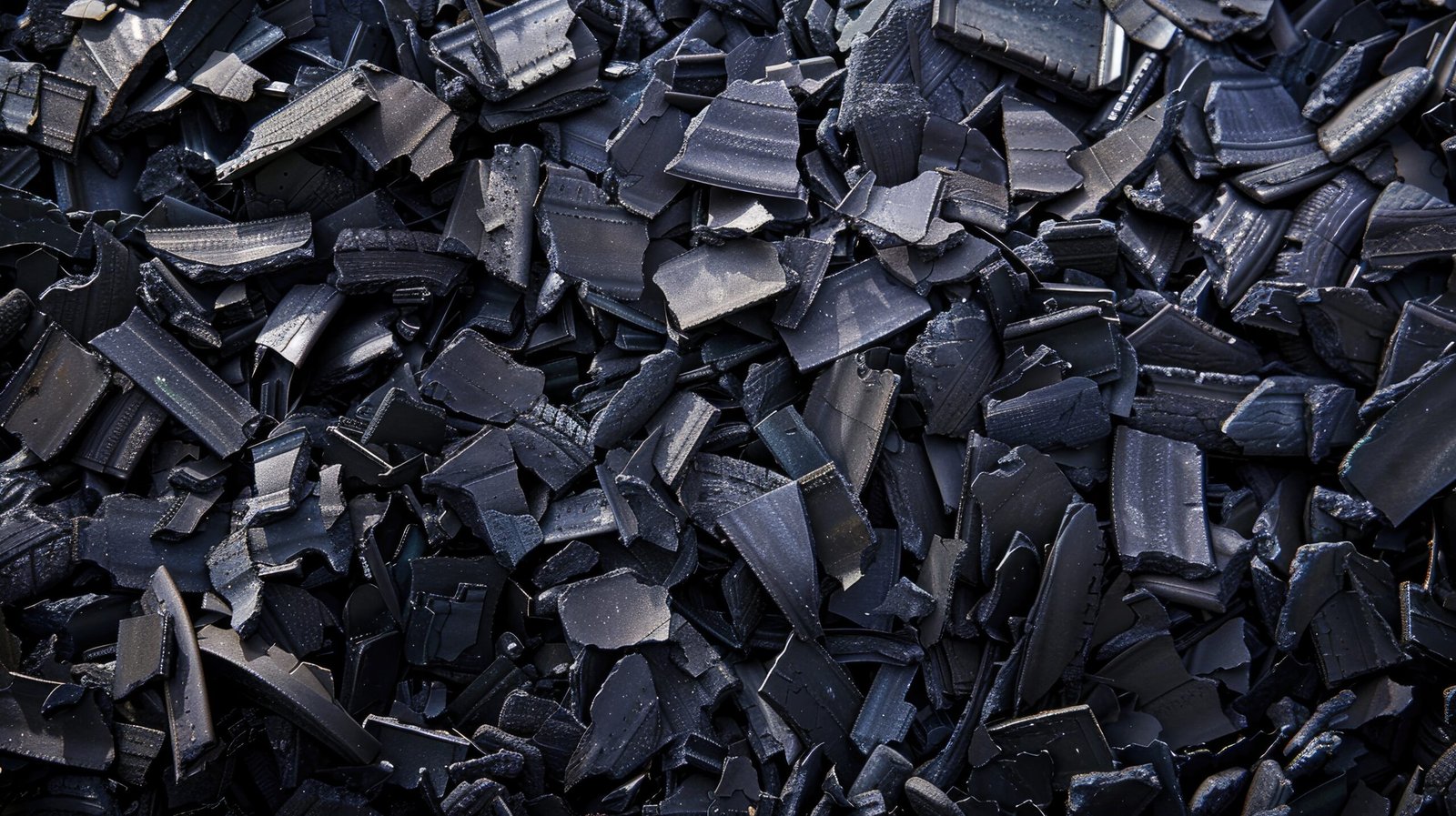
Crumb rubber, often referred to as ‘black gold’ in recycling circles, represents a bridge between waste reduction and resource recovery. It can be reused in construction, automotive, sports infrastructure, and even green building materials—turning what was once a waste product into a high-value commodity. This transformation is made possible by advancements in recycling technology and the policy push from India’s Extended Producer Responsibility (EPR) regulations, which are mandating proper collection, recycling, and reuse of tyre waste across the country.
The circular economy model promotes a regenerative system where materials are reused and retained within the economy for as long as possible. Crumb rubber perfectly embodies this principle. Instead of extracting new raw materials or burning old tyres for fuel, the material can be processed into long-lasting products that reduce environmental impact and stimulate new markets. By capturing the full lifecycle value of rubber, India is moving closer to a system that prioritizes sustainability alongside economic growth.
The economic potential of crumb rubber is also considerable. With a growing domestic demand for sustainable infrastructure solutions, especially in rural and urban development projects, the use of recycled materials is becoming both an environmental and business imperative. State and central government initiatives to use crumb rubber in road construction are setting precedents, encouraging more players to enter the sector and invest in processing infrastructure.
- Crumb rubber reduces reliance on virgin rubber and synthetic alternatives.
- It lowers landfill pressure and mitigates the environmental risks of open tyre burning.
- The material can serve as a cost-effective component in roads, mats, and molded products.
As India strengthens its EPR framework and expands its circular economy ambitions, the value locked inside used tyres is becoming more evident. Crumb rubber is no longer seen as mere waste—it’s being recognized as a strategic material with the potential to generate employment, reduce emissions, and build more sustainable infrastructure. In this new era of tyre waste management, unlocking the true value of crumb rubber is not just good environmental policy—it’s a smart economic move.
In recent years, crumb rubber—finely ground rubber derived from end-of-life tyres—has emerged as a high-potential resource in India’s growing circular economy. As tyre waste management becomes more regulated under Extended Producer Responsibility (EPR), industries are beginning to recognize the untapped economic and environmental value of this so-called ‘black gold.’ This blog explores how EPR policies are unlocking new opportunities for crumb rubber reuse across sectors, driving innovation while closing critical resource loops.
From Waste to Worth: The Journey of Tyres into Crumb Rubber
The transformation of used tyres into crumb rubber is a process that highlights the shift from a linear waste model to a circular value chain. Tyres, once discarded, are no longer viewed merely as garbage but as raw materials for new, durable applications. This journey begins with the collection and transportation of end-of-life tyres (ELTs) from various sources, including automobile repair shops, fleet depots, and waste aggregators. These tyres are then brought to authorized recycling facilities where the true conversion process begins.
At the recycling plant, tyres undergo initial cleaning to remove debris, followed by shredding into smaller, more manageable pieces. Depending on the desired crumb size and quality, the material is then processed through ambient or cryogenic grinding methods. Ambient grinding mechanically tears the rubber apart at room temperature, while cryogenic grinding freezes the rubber with liquid nitrogen before shattering it into fine granules. The resulting crumb rubber ranges in size from coarse chips to ultra-fine powder, each suitable for different industrial applications.
This step-by-step process not only prevents the environmental hazards of open burning or dumping, but it also creates a valuable secondary raw material. Crumb rubber produced through these methods retains many of the physical properties of virgin rubber—such as elasticity, resistance to abrasion, and tensile strength—making it a sustainable alternative in various manufacturing sectors.
- Collection: ELTs are gathered from vehicle owners, workshops, and tire dealers.
- Sorting and Cleaning: Tyres are sorted and cleaned to remove dirt and metal components.
- Shredding: Tyres are chopped into smaller chunks using industrial shredders.
- Granulation: Shredded rubber is further processed into granules through grinding methods.
- Purification: Steel wires and fibers are removed to ensure material purity.
- Packaging and Distribution: Crumb rubber is packaged for sale to industries needing recycled inputs.
The journey from waste to worth is also monitored under the Extended Producer Responsibility (EPR) framework. Producers are required to ensure that a certain percentage of their products are collected and processed responsibly. This has led to better traceability and a rise in formal recycling operations. Many recyclers are now CPCB-registered and operate with transparency, giving end-users confidence in the origin and quality of the crumb rubber they purchase.
Ultimately, the journey of a discarded tyre doesn’t have to end in a landfill. Through the right infrastructure, policy enforcement, and growing market demand, tyre waste can be given a second life as crumb rubber—turning a former pollution risk into a valuable contributor to India’s green economy.
Every year, millions of end-of-life tyres (ELTs) are discarded across India, creating both an environmental hazard and a missed economic opportunity. When processed correctly, these tyres can be converted into crumb rubber—a versatile material used in everything from road surfacing and sports fields to industrial applications and footwear. The transformation of scrap tyres into valuable products is central to modern tyre waste management, and EPR is playing a pivotal role in formalizing this journey.
What Is Crumb Rubber and Why It Matters
Crumb rubber is produced by shredding used tyres and grinding them into fine granules, typically between 0.5 mm and 4 mm in size. It retains the physical properties of natural rubber, making it a cost-effective and sustainable material substitute. This versatile output finds application in asphalt rubber mixes, playground mats, insulation panels, and even railway pads, offering a low-carbon alternative to virgin rubber and synthetic materials.
EPR’s Influence on Tyre Recycling Markets
Extended Producer Responsibility (EPR) has emerged as a pivotal force in reshaping the tyre recycling market in India. Introduced to make producers accountable for the end-of-life management of the products they introduce into the market, EPR regulations have significantly influenced how tyre waste is collected, processed, and reintegrated into the economy. The policy shift from voluntary recycling to mandatory compliance has resulted in a more organized and transparent tyre recycling ecosystem, unlocking both environmental and economic benefits.
Prior to the EPR framework, much of India’s tyre waste was handled through informal channels with limited environmental oversight. This led to widespread dumping, illegal burning, and inefficient recycling practices. However, the introduction of tyre-specific EPR guidelines by the Central Pollution Control Board (CPCB) in 2022 marked a turning point. Under the new rules, tyre producers, importers, and brand owners (PIBOs) are legally required to ensure that a defined percentage of the tyres they sell are responsibly collected and recycled through certified facilities.
As a result, there has been a surge in the registration of recyclers, producers, and aggregators on the CPCB’s EPR portal. This digital platform enables real-time tracking of tyre waste flows, from collection to processing, offering unprecedented levels of traceability. It also ensures that only verified recyclers can operate within the system, improving overall accountability and reducing opportunities for greenwashing or underreporting.
- Producers must meet annual tyre recycling targets under EPR compliance.
- Only CPCB-registered recyclers and processors are authorized to handle ELTs.
- Digital record-keeping ensures traceability and curbs unauthorized disposal.
This regulatory structure is fostering investments in formal recycling infrastructure, especially for crumb rubber production. With clear rules and a traceable chain of custody, recyclers are now better positioned to secure financing, upgrade their technology, and meet industry standards. Simultaneously, producers are actively seeking partnerships with compliant recyclers to fulfill their EPR obligations while minimizing environmental impact.
Moreover, the market for crumb rubber has received a boost as a result of growing compliance-driven demand. Construction firms, rubber goods manufacturers, and road development agencies are increasingly willing to purchase recycled material when it is backed by verified data. This has led to the emergence of a more competitive and quality-focused market where both supply and demand are influenced by regulatory benchmarks, not just cost considerations.
In essence, EPR is not merely a regulatory requirement—it is a catalyst for systemic change. By aligning environmental goals with economic incentives and market development, EPR is driving a transformation in India’s tyre recycling industry. It is enabling a shift from informal, fragmented operations to a structured and scalable model that prioritizes sustainability, traceability, and long-term value creation.
India’s EPR framework for tyre waste, formalized by the Central Pollution Control Board (CPCB), mandates tyre producers to ensure the environmentally sound management of waste tyres. This has led to an uptick in registered recyclers and processors who specialize in turning ELTs into crumb rubber. EPR not only enforces accountability but also incentivizes investment in better collection, processing, and end-use infrastructure, helping crumb rubber markets to mature and diversify.
How Compliance Is Driving Industrial Innovation
Manufacturers and recyclers are leveraging compliance pressures to innovate. Leading tyre brands are partnering with recyclers to meet EPR targets, funding technologies like ambient grinding and cryogenic pulverization for cleaner, higher-quality crumb. This has improved the reliability and consistency of crumb rubber, making it more attractive to sectors like construction and automotive manufacturing that demand stringent quality standards.
- EPR regulations have increased demand for licensed recyclers and processors.
- Crumb rubber is gaining traction as a sustainable input across multiple industries.
- Investment in recycling tech is rising due to compliance and market pressure.
Unlocking New Use Cases for Crumb Rubber
As India strengthens its EPR framework for tyre waste, the demand for recycled outputs like crumb rubber is growing—not only in volume but also in versatility. What was once a niche material is now finding its way into diverse sectors, driven by innovation, regulatory backing, and the need for sustainable alternatives to conventional materials. With reliable sourcing made possible through formal recycling networks, industries are more open than ever to integrating crumb rubber into their supply chains.
One of the most well-known applications of crumb rubber is in road construction, particularly through its incorporation in rubberized bitumen. When added to asphalt, crumb rubber enhances road durability, reduces maintenance frequency, and improves resistance to cracking and weather damage. The Indian government, through programs like the Pradhan Mantri Gram Sadak Yojana (PMGSY), has already piloted rubberized roads in rural areas—turning tyre waste into an asset for infrastructure development.
Beyond roads, crumb rubber is gaining traction in consumer and industrial products. Its shock-absorbing and anti-slip properties make it ideal for flooring in gyms, playgrounds, and sports arenas. In construction, it is being used in acoustic insulation panels and underlayments for vibration dampening. Some manufacturers are even blending crumb rubber into molded goods such as tiles, mats, hoses, and conveyor belts, reducing their dependency on virgin materials and lowering carbon footprints.
- Modified bitumen for road surfacing and maintenance
- Playground and athletic flooring with improved shock absorption
- Acoustic and thermal insulation in building materials
- Injection-molded products like mats, pads, and tiles
- Blended compounds for automotive parts and rubber goods
What makes these new applications even more promising is their alignment with national sustainability goals. The Ministry of Environment, Forest and Climate Change (MoEFCC) encourages the use of recycled materials in construction and public works, and crumb rubber fits squarely into that vision. Meanwhile, private companies are also adopting it as part of their ESG (Environmental, Social, and Governance) strategies, viewing recycled inputs as a way to build greener products and reduce operational risk.
As research continues into rubber-polymer blends, lightweight composites, and sustainable additives, new markets for crumb rubber are likely to emerge. The combination of policy support, market innovation, and improved material quality positions crumb rubber as a scalable solution for multiple sectors. What was once an environmental liability is now being reimagined as a reliable, cost-effective, and responsible material with a strong future in India’s green economy.
As the market for crumb rubber expands, new and innovative use cases are emerging. Government-led initiatives like rubberized roads under the PMGSY scheme, and private investments in green building materials, are validating crumb rubber’s role in sustainable infrastructure. With EPR enforcing end-use traceability, producers are now actively seeking applications that align with their circularity goals while reducing material costs.
Case Study: Rubberized Roads in Rural India
Several states, including Kerala and Tamil Nadu, have piloted rural roads paved with crumb rubber-modified bitumen (CRMB). These roads last longer, are more weather-resistant, and utilize up to 1 ton of tyre waste per kilometer. Such projects, when scaled, can divert thousands of tonnes of tyre waste annually, offering a compelling example of how EPR-aligned initiatives create measurable impact.
The Road Ahead: Building a Resilient Ecosystem for Crumb Rubber
India’s transition toward a circular tyre economy is gaining momentum, but realizing the full potential of crumb rubber requires a more resilient and integrated ecosystem. While EPR has laid the policy foundation for accountability and traceability, the long-term viability of crumb rubber markets hinges on the convergence of several key enablers—ranging from infrastructure and financing to public-private collaboration and quality assurance mechanisms.
One of the most pressing needs is investment in advanced recycling infrastructure. Many current facilities operate with outdated equipment or limited capacity, which restricts the production of high-grade crumb rubber suitable for demanding applications. Scaling up capacity while improving quality standards is critical to meet the growing demand from sectors like construction, automotive, and sports infrastructure. Additionally, more regionally distributed processing units are needed to reduce transport costs and minimize the carbon footprint of logistics.
Policy alignment and enforcement consistency also remain essential. While the CPCB has created a structured EPR portal and guidelines, the implementation varies across states, leading to confusion among recyclers and producers. A standardized national approach—supported by local enforcement—can ensure smoother compliance, higher participation, and better data accuracy. This would also attract formal sector players, who often hesitate to enter fragmented or opaque markets.
- Expand and modernize recycling infrastructure with support for SMEs and startups.
- Strengthen cross-state enforcement of EPR norms for consistency and compliance.
- Develop quality certification and labeling standards for crumb rubber products.
- Promote public procurement of products made with crumb rubber to stimulate demand.
- Encourage industry R&D in rubber-polymer blends and value-added applications.
Public procurement can serve as a powerful catalyst in this ecosystem. Government-led projects in roads, schools, and sports facilities can prioritize the use of certified crumb rubber materials, helping to establish a stable baseline of demand. Simultaneously, building consumer and industry awareness about the benefits and applications of crumb rubber is crucial to expand market confidence and drive innovation.
Ultimately, a resilient crumb rubber ecosystem cannot be built by regulation alone—it requires partnerships, innovation, and shared vision. Producers, recyclers, research institutions, and policymakers must work collaboratively to create a sustainable value chain that supports job creation, environmental protection, and industrial competitiveness. By closing the loop on tyre waste, India has the opportunity to become a global model for resource-efficient and inclusive green growth.
While progress has been made, a resilient ecosystem for crumb rubber still requires broader coordination. Policy alignment, public-private partnerships, investment in R&D, and consumer awareness are crucial to sustain momentum. India’s EPR for tyres is a foundational step, but to fully harness the potential of crumb rubber, stakeholders must work collaboratively to ensure quality, transparency, and demand-driven innovation.
Closing the Loop with Better Traceability and Markets
EPR registries and tracking systems are beginning to provide data on tyre waste flows, which can be used to match crumb rubber supply with end-use industries. This visibility reduces leakage into informal or illegal disposal and supports the emergence of credible carbon-offset models linked to tyre recycling. Improved traceability also helps manufacturers validate their sustainability claims and align with ESG commitments.
Crumb Rubber’s Bright Future in India’s Green Growth Story
Crumb rubber is rapidly emerging as a critical component in India’s broader mission for sustainable development and green industrialization. As the nation advances toward its environmental and circular economy goals, the strategic use of recycled materials like crumb rubber offers both environmental benefits and economic opportunities. Once considered a problematic waste stream, used tyres are now viewed as a valuable resource that can contribute to job creation, reduced emissions, and more resilient infrastructure.
India’s policy environment—particularly the implementation of Extended Producer Responsibility (EPR) for tyre waste—has catalyzed this transformation. With clearer roles, measurable targets, and improved traceability, EPR is aligning producer incentives with sustainable practices. Crumb rubber, as a byproduct of compliant recycling efforts, is gaining legitimacy and value across sectors. Its applications in road construction, playgrounds, molded goods, and insulation materials are helping replace virgin materials and reduce dependency on resource-intensive production.
Looking ahead, the future of crumb rubber in India is not just about expanding recycling but about integrating it meaningfully into national development strategies. With rising demand for sustainable infrastructure and green building materials, the potential for crumb rubber is substantial. India’s commitments under the Paris Agreement and its push for a low-carbon economy make it essential to find scalable solutions that address both waste and material innovation—and crumb rubber fits this dual role well.
- Crumb rubber supports national efforts to reduce landfill dependency and promote reuse.
- It contributes to lower emissions in construction and manufacturing applications.
- Wider adoption can stimulate green jobs in recycling, logistics, and product design.
- India’s EPR-driven compliance mechanisms create a reliable supply chain for industries.
- Ongoing R&D can unlock newer, more advanced uses of recycled rubber compounds.
Realizing this potential will require continued investment in infrastructure, innovation in material science, and strong collaboration between the public and private sectors. Government-led procurement, R&D incentives, and industry certifications can all help establish crumb rubber as a mainstream, high-quality input. Additionally, increased public awareness about the benefits of recycled rubber can build greater demand and further close the loop on tyre waste.
In conclusion, crumb rubber represents a powerful symbol of how waste can be turned into value through thoughtful regulation and market engagement. Its rise reflects India’s broader journey toward greener growth, where environmental responsibility is not a burden but a pathway to innovation and opportunity. With the right support, crumb rubber can continue to fuel India’s transition to a circular, low-carbon economy—where every used tyre is not a problem to solve, but a resource to unlock.
Crumb rubber is no longer just a waste by-product—it’s an asset with enormous potential to contribute to India’s green transition. With EPR acting as both a regulatory lever and a market catalyst, stakeholders now have the opportunity to build an inclusive, profitable, and environmentally sound tyre recycling ecosystem. Whether it’s in the roads we travel or the goods we use, crumb rubber is ready to play a central role in shaping a more sustainable tomorrow.
Leave a Reply