Why Inclusive E-Waste Management Matters More Than Ever
Content for Why Inclusive E-Waste Management Matters More Than Ever could not be generated.
India generates over 1.6 million tonnes of e-waste annually, a figure expected to rise as digital adoption spreads. While formal recyclers are steadily growing under Extended Producer Responsibility (EPR) rules, the informal sector still handles the lion’s share, often under hazardous conditions and without regulation. This blog explores the crucial need to bridge informal e-waste handling with formal EPR structures, ensuring both environmental safety and social equity.
Understanding the Role of the Informal E-Waste Sector
Content for Understanding the Role of the Informal E-Waste Sector could not be generated.
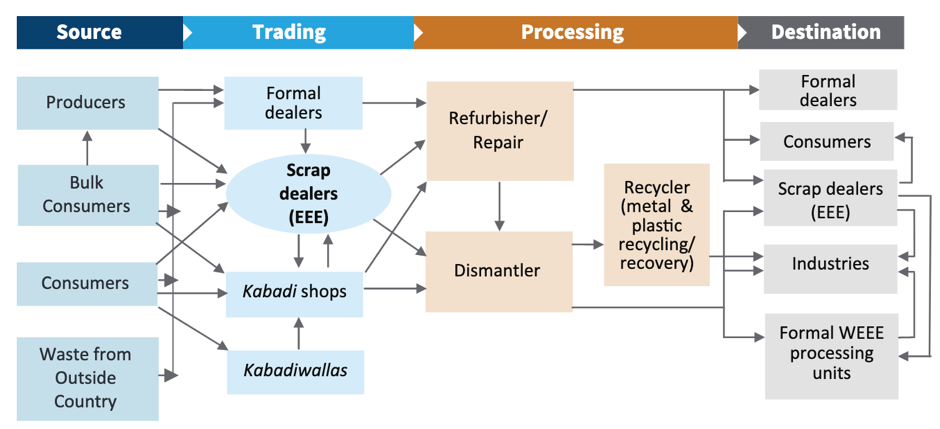
The informal sector has long been the backbone of e-waste collection and dismantling in India. Comprising kabadiwalas, waste pickers, and backyard recyclers, these actors often operate outside regulatory frameworks but provide vital services. They offer high collection efficiency and are deeply embedded in local communities, yet their lack of training and access to formal infrastructure results in serious environmental and health hazards.
Environmental Risks of Informal Recycling
Content for Environmental Risks of Informal Recycling could not be generated.
Informal recyclers often use rudimentary techniques like acid baths or open burning to extract valuable metals from electronics. These methods release toxic substances like lead, mercury, and dioxins into the environment. The health toll is high exposure to e-waste toxins is linked to respiratory illness, neurological damage, and cancer, particularly in children working in or living near informal recycling hubs.
Economic Dependence and Social Exclusion
Despite the health and environmental risks, many workers in the informal sector depend on e-waste for their livelihoods. However, they often face social stigma and economic marginalization. Without access to benefits, training, or formal markets, they are excluded from the EPR ecosystem even though they contribute significantly to material recovery.
Pathways to Integration: Bringing Informal Workers into Formal Systems
Content for Pathways to Integration: Bringing Informal Workers into Formal Systems could not be generated.
Successfully implementing EPR in India requires integrating the informal workforce into the formal recycling ecosystem. Rather than displacing them, policies must aim to uplift these workers through training, recognition, and fair market access. By recognizing their contributions and building inclusive value chains, the EPR system can become both environmentally effective and socially just.
Partnership Models That Work
Cities like Pune and Delhi have piloted models where informal waste workers are organized into cooperatives or linked to Producer Responsibility Organizations (PROs). Through training programs, identity cards, and capacity-building initiatives, these models help workers transition into safer, regulated roles. Such frameworks not only improve recycling outcomes but also create dignified employment opportunities.
- Formal training enhances safety and recovery efficiency
- Identity and documentation grant access to government schemes
- Partnerships with PROs create traceable, accountable supply chains
Policy Levers and Industry’s Role in Driving Inclusion
Content for Policy Levers and Industry’s Role in Driving Inclusion could not be generated.
Government regulations under the E-Waste (Management) Rules 2022 encourage producer responsibility, but inclusion of informal stakeholders remains vague. Clearer guidelines, incentives for inclusive PROs, and mandates for capacity-building initiatives can accelerate integration. Industry players must also step up—by funding training programs, establishing buy-back mechanisms, and supporting hybrid models that include both formal and informal channels.
The Power of Incentives and Traceability
Incentives can make or break informal-formal collaboration. Producers who support training and onboarding of informal workers could receive extended compliance credits. Likewise, digital traceability tools—like QR codes, mobile apps, and blockchain platforms—can help verify the role of informal workers in e-waste collection, ensuring they are fairly compensated and visible within the supply chain.
- Digital tools can improve transparency and compliance
- Incentive-based models encourage industry engagement
- Policy alignment needed to prevent informal sector exclusion
A Unified Future for E-Waste Management
Content for A Unified Future for E-Waste Management could not be generated.
The divide between informal recyclers and formal EPR structures is neither sustainable nor fair. Bridging this gap is not just a regulatory necessity—it’s an opportunity to build a more inclusive, resilient, and circular economy. As India scales its digital infrastructure, inclusive EPR models can ensure that progress doesn’t come at the cost of people or the planet. It’s time to bring every stakeholder to the table and design a future that works for all.
Leave a Reply