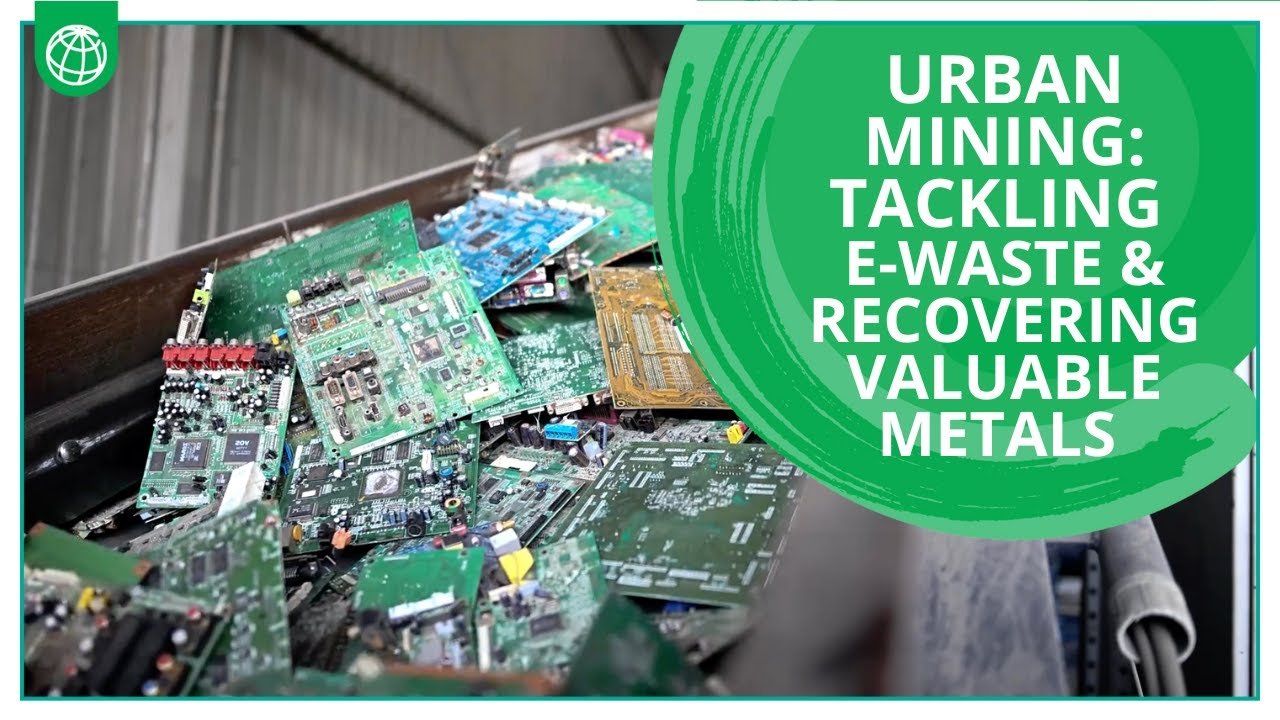
The Hidden Treasure in Our Trash: Exploring Urban Mining Through EPR
Every year, India generates over 1.6 million tonnes of electronic waste—discarded devices ranging from smartphones and laptops to old TVs, printers, and network equipment. While these items may appear to be junk on the surface, they actually house a wealth of hidden value. Inside the intricate circuitry of e-waste lies a rich cocktail of precious and rare metals, including gold, silver, palladium, and platinum. Extracting these valuable resources through a process known as ‘urban mining’ is fast becoming a strategic necessity for both environmental sustainability and resource independence.
Urban mining refers to the practice of recovering valuable metals and materials from electronic waste instead of extracting them through traditional mining methods. This concept is particularly vital for India, which imports nearly all of its gold and many other critical minerals. With urban mining, cities themselves become a secondary source of raw materials—especially when facilitated through Extended Producer Responsibility (EPR) frameworks that mandate producers to manage the entire lifecycle of their electronic products, including end-of-life recovery.
E-waste is surprisingly metal-rich. According to the United Nations, one tonne of discarded mobile phones contains about 100 times more gold than a tonne of gold ore. Beyond gold, electronics often contain copper, aluminum, rare earth elements, and even cobalt—materials essential for manufacturing new electronics, batteries, and green energy infrastructure. In this way, urban mining transforms waste into a sustainable resource loop, reducing environmental pressure from virgin mining while unlocking economic potential.
India’s EPR regime, governed by the E-Waste (Management) Rules, 2022, places clear obligations on producers to collect, channel, and recycle e-waste responsibly. Under these rules, urban mining becomes not just a possibility, but a legally supported path forward. When e-waste is properly collected and routed to authorized recyclers, advanced processes such as pyrometallurgy and hydrometallurgy can extract precious metals with high recovery efficiency. This creates value both upstream and downstream—from producers meeting compliance targets to recyclers investing in state-of-the-art facilities.
- Urban mining reduces reliance on environmentally destructive virgin mining.
- It supports India’s goal of a circular economy by reclaiming finite resources.
- EPR ensures a regulatory framework that channels e-waste to formal recyclers.
- Valuable materials recovered include gold, silver, copper, and rare earth metals.
- The process promotes green job creation and fosters innovation in recycling.
As India’s digital consumption continues to grow, so too does the volume of electronic waste. Rather than seeing this as a crisis, policymakers, industry leaders, and recyclers have an opportunity to reframe e-waste as a resource-rich opportunity. Through urban mining—guided and enabled by robust EPR policies—India can turn discarded electronics into a strategic asset, reducing resource dependency, cutting carbon footprints, and laying the foundation for a more sustainable technological future.
From smartphones and laptops to televisions and circuit boards, modern electronics are more than just tools — they’re urban treasure troves. As India grapples with its mounting e-waste challenge, urban mining is emerging as a game-changing strategy to recover valuable metals like gold, silver, and palladium. Extended Producer Responsibility (EPR) policies are helping channel these materials back into the economy, reducing dependency on virgin mining and driving a more circular economy.
What Is Urban Mining — And Why Does It Matter?
Content for What Is Urban Mining — And Why Does It Matter? could not be generated.
Urban mining refers to the process of reclaiming raw materials from used electronics, often referred to as e-waste. These discarded devices contain significant quantities of precious and rare metals, embedded in everything from wiring to microchips. Unlike traditional mining, which depletes natural resources and often harms ecosystems, urban mining taps into already-extracted materials that are hiding in plain sight within cities and landfills.
The Value Locked Inside Electronics
A tonne of discarded smartphones can yield more gold than a tonne of mined ore. For example, a typical smartphone contains about 0.034 grams of gold, 0.34 grams of silver, and trace amounts of rare earth elements. When aggregated across millions of devices, this becomes a substantial reservoir of high-value materials. Recognising this, countries like Japan have mined e-waste to create Olympic medals, showcasing the potential of recovering resources through urban mining.
The Role of EPR in Scaling Urban Mining in India
Content for The Role of EPR in Scaling Urban Mining in India could not be generated.
Extended Producer Responsibility (EPR) mandates that manufacturers and importers take responsibility for the post-consumer stage of their products. In the context of e-waste, this includes setting up collection networks, funding recycling infrastructure, and meeting recovery targets. EPR helps create a structured pipeline for e-waste to reach certified recyclers who can extract valuable metals safely and efficiently.
Formalizing the Recovery Supply Chain
Content for Formalizing the Recovery Supply Chain could not be generated.
A major hurdle in urban mining is the informal recycling sector, where unregulated dismantling leads to environmental pollution and poor recovery yields. EPR policies are shifting the paradigm by incentivizing formal recyclers and bringing transparency through tracking and reporting mechanisms. CPCB-registered PROs (Producer Responsibility Organizations) are playing a crucial role in bridging producers with authorized dismantlers and reprocessors.
Economic and Environmental Benefits
Urban mining under EPR reduces reliance on environmentally damaging mining practices, cuts greenhouse gas emissions, and conserves finite resources. According to the UN Global E-Waste Monitor, urban mining can generate economic returns up to 40 times higher than traditional mining, especially for metals like gold and palladium. For India, this presents a dual opportunity to boost resource security and create green jobs.
- EPR ensures traceability and accountability in material recovery
- Urban mining reduces India’s dependence on imported raw materials
- Safe recycling prevents hazardous waste leakage into the environment
Challenges and Innovations on the Road Ahead
Content for Challenges and Innovations on the Road Ahead could not be generated.
Despite its promise, urban mining in India faces challenges such as limited awareness, inadequate collection infrastructure, and gaps in enforcement. However, technological advances in material separation, AI-driven sorting, and blockchain-based tracking are paving the way for more efficient and secure recovery processes. Public-private partnerships and pilot projects are also beginning to scale up urban mining initiatives.
Closing the Loop with Circular Thinking
True circularity means designing products with recyclability in mind. By integrating urban mining into product lifecycle planning, producers can not only meet EPR obligations but also tap into secondary raw materials for future manufacturing. This approach supports Make in India and Atmanirbhar Bharat initiatives by creating a resilient domestic resource supply chain.
From Waste to Wealth: Rethinking E-Waste as a Resource
Content for From Waste to Wealth: Rethinking E-Waste as a Resource could not be generated.
Urban mining flips the narrative of waste — from burden to opportunity. With the right mix of policy enforcement, industry participation, and public awareness, India can transform its growing pile of e-waste into a sustainable resource stream. As EPR continues to evolve, the country stands poised to lead a green revolution where yesterday’s gadgets fuel tomorrow’s growth.
Leave a Reply