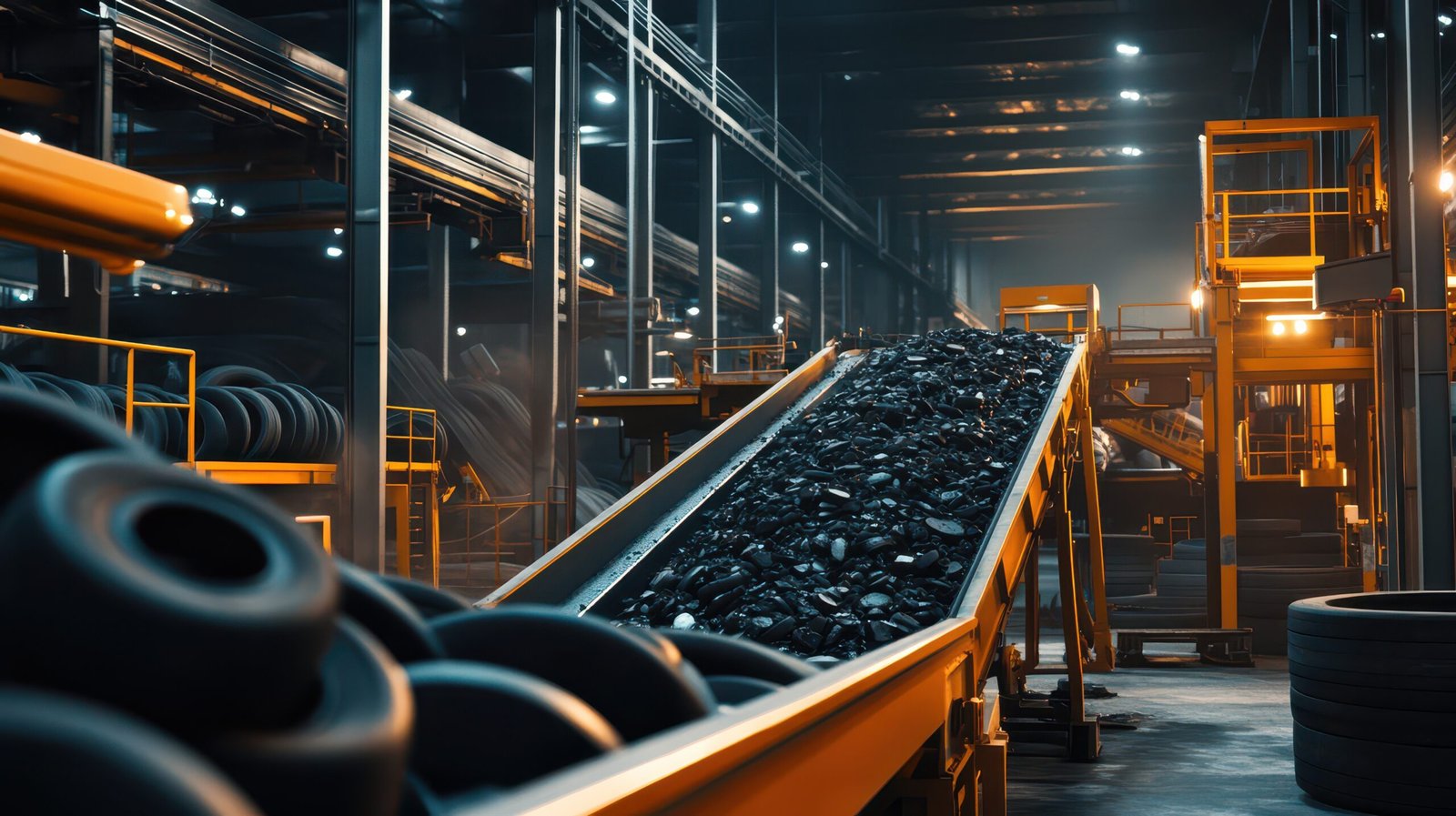
Why Off-Road Tyre Waste Needs Special Attention
Off-road tyres—used on mining trucks, earth movers, agricultural tractors, and construction machinery—represent a growing but often neglected stream of waste in India’s environmental management landscape. These tyres are significantly larger, heavier, and more complex than their on-road counterparts, which makes their end-of-life handling both technically and logistically challenging. Despite their ubiquity in infrastructure and industrial sectors, off-road tyres remain outside the spotlight when it comes to policy-driven waste solutions, including Extended Producer Responsibility (EPR).
Unlike passenger or commercial vehicle tyres, off-road variants are built for extreme endurance. Their robust construction includes multiple layers of reinforced rubber, steel, and synthetic fabrics, which help them withstand punishing terrain and heavy loads. However, this same ruggedness poses a serious problem at end-of-life. These tyres are difficult to cut, shred, or process using standard recycling technologies, and their sheer volume and weight make transportation costly. Many are simply stockpiled or abandoned at job sites, contributing to long-term land use issues and potential fire or leachate risks.
Environmental concerns associated with off-road tyre waste go far beyond land occupation. Inadequate disposal methods, such as open-air burning or illegal dumping, release toxic chemicals into the soil and atmosphere, contributing to air pollution and soil degradation. These tyres are often disposed of in remote or rural areas, where formal recycling infrastructure is absent and oversight is limited. Without specific inclusion under EPR mandates, producers and users lack accountability, and the waste continues to accumulate unchecked.
Given the industrial sectors they serve, off-road tyres are inherently tied to operations with a high environmental footprint. Addressing this waste stream is essential not only for ecological reasons but also to ensure responsible and sustainable practices in India’s mining, agriculture, and infrastructure sectors. Tailoring EPR schemes to cover off-road tyres can ensure that producers are part of the solution and help build a reverse logistics ecosystem that brings these heavy-duty materials back into the circular economy.
- Off-road tyres are heavier, larger, and more difficult to recycle than standard tyres.
- Disposal in remote areas leads to regulatory blind spots and poor environmental outcomes.
- Current EPR frameworks often overlook off-road tyre categories, leaving a major gap in policy enforcement.
- Improper disposal contributes to long-term soil, air, and land contamination.
- A tailored EPR approach can help drive collection, recycling, and reuse in industrial sectors.
From mining trucks to agricultural harvesters, off-road vehicles use oversized, durable tyres built to withstand extreme conditions. But when these tyres reach end-of-life, they present unique disposal challenges that differ from conventional passenger or commercial tyres. Extended Producer Responsibility (EPR) frameworks, while effective for urban tyre management, must evolve to tackle the complexities of off-road tyre waste. This blog explores how policy, innovation, and industry collaboration can align to address this overlooked segment of tyre recycling.
Understanding the Scale and Impact of Off-Road Tyre Waste
Off-road tyres play a critical role in India’s industrial machinery ecosystem. From massive dump trucks operating in coal mines to tractors ploughing through farmland, these tyres are engineered to perform under intense pressure. But their end-of-life footprint is growing—and largely unaccounted for. Estimates suggest that thousands of tonnes of off-road tyre waste are generated annually across India, yet very little of this waste makes its way into formal recycling streams. This lack of traceability and recovery is not just a missed opportunity—it poses a significant environmental liability.
These tyres are not like typical automobile tyres. They can weigh upwards of 500 kilograms each and are designed with complex materials to resist wear, chemical exposure, and terrain abrasion. Consequently, when discarded, they remain in the environment for decades unless actively retrieved and processed. What’s more, many off-road operations occur in geographically isolated areas, such as mining belts in Jharkhand or Rajasthan or large agricultural zones in Madhya Pradesh and Punjab. This remoteness compounds the challenges of collection, tracking, and compliance with any formal waste management system.
While precise data is scarce, the scale of use offers clues. India is among the world’s top markets for construction and mining equipment, and agricultural mechanization is rapidly increasing. The demand for off-road tyres is expanding in parallel. Despite this, there is no comprehensive national database that tracks the production, import, usage, or disposal of off-road tyres. This data gap limits the ability of regulators to enforce recovery obligations and makes it harder for recyclers to assess the viability of collection networks for such bulky waste.
The environmental impact is multifaceted. Tyres left to degrade in open fields can leach chemicals into the soil and groundwater. When burned—either intentionally or due to accidental fires—they release a mix of carcinogens, heavy metals, and particulate matter into the atmosphere. Large tyre piles also attract disease-carrying pests such as mosquitoes and rodents, creating public health risks in addition to ecological ones.
- Off-road tyres are significantly heavier and larger than standard tyres, making them harder to collect and recycle.
- Lack of centralized tracking data hinders enforcement of recovery and recycling targets.
- Tyres are often abandoned in remote areas, far from regulated recycling channels.
- Environmental hazards include air pollution from burning and soil contamination from leaching chemicals.
- Rapid industrial growth is increasing the volume of off-road tyre waste year on year.
India’s industrial and infrastructure sectors rely heavily on heavy-duty machinery equipped with off-road tyres. These tyres can weigh hundreds of kilograms and are often made with specialized rubber compounds that resist wear but complicate recycling. Their disposal poses environmental and logistical challenges, particularly in remote sites such as quarries, construction zones, and agricultural fields where waste retrieval is not always systematic.
Off-Road Tyres: Built Tough, But Difficult to Recycle
Off-road tyres are designed for durability in some of the harshest operating conditions imaginable—mines, construction zones, and large-scale farms. Their structure is engineered to support massive loads, resist cuts and abrasions, and function reliably across uneven terrain. To achieve this, manufacturers use multiple layers of reinforced rubber, steel belts, and advanced synthetic materials, resulting in tyres that are incredibly resilient—but also incredibly difficult to dismantle or recycle.
Standard tyre recycling equipment is often not equipped to handle the size, density, and material composition of off-road tyres. Their thick sidewalls and embedded steel make shredding more energy-intensive and laborious. Additionally, many recycling facilities are configured to process tyres of standard dimensions, leading to inefficiencies or outright refusal when large off-road tyres are presented for recycling. This mismatch between tyre design and recycling capability creates a bottleneck in the circular economy, where technically recyclable products remain unprocessed due to infrastructure limitations.
Moreover, the lack of scalable solutions for handling these tyres means that many are either left unused for long periods or disposed of through environmentally harmful practices. Without dedicated technology or investment in specialized recycling systems, off-road tyres continue to pose a significant barrier to sustainable waste management in industrial sectors.
Unlike standard tyres, off-road tyres are made to endure high stress and adverse terrain, making them thicker and more chemically complex. This durability translates into longer lifespans, but when discarded, they do not break down easily. Many recycling technologies, including shredding and pyrolysis, must be adapted or scaled up to handle such materials, increasing the cost and complexity of processing.
The Disposal Dilemma in Remote and Industrial Locations
Most heavy machinery operates far from urban waste management systems. In mining or agricultural sites, used tyres are often stockpiled or, worse, illegally dumped or burned, leading to soil and air contamination. Without mandatory take-back systems or on-site collection mechanisms, it becomes difficult to ensure that these tyres enter regulated recycling channels.
How EPR Frameworks Can Be Adapted for Off-Road Applications
Extended Producer Responsibility (EPR) has become a cornerstone of India’s waste management policy, requiring manufacturers, importers, and brand owners to take responsibility for the end-of-life treatment of their products. While current EPR rules for tyres focus on those used in passenger vehicles and commercial fleets, there is a growing need to adapt these frameworks to include off-road applications. Given the size, usage context, and disposal challenges of off-road tyres, a one-size-fits-all policy is inadequate. Tailored strategies are essential to bring these bulky and environmentally persistent products into the fold of responsible recovery and recycling.
One of the key barriers is the lack of clear categorization for off-road tyres within existing EPR legislation. Most EPR guidelines treat tyres as a uniform category, which can obscure the very different lifecycle, recovery costs, and logistical needs of tyres used in agriculture, construction, and mining. To bridge this gap, policymakers must develop category-specific targets and obligations that reflect the real-world conditions in which these tyres are used and discarded. This might include differentiated collection quotas, longer recovery timelines due to the remote locations of usage, and incentives for setting up localized processing infrastructure.
Additionally, adapting EPR for off-road tyres requires a rethink of logistics. Traditional reverse supply chains—designed for urban or highway-based vehicles—are not equipped to handle bulky waste generated at remote or decentralized sites. A successful adaptation would involve deploying regional collection hubs, subsidized retrieval services, or even mobile dismantling units that can service industrial sites directly. This would reduce the burden on end-users and increase compliance with EPR mandates.
Policy adaptation must also consider stakeholder collaboration. Many off-road tyres are imported or fitted onto heavy equipment purchased from foreign OEMs. Requiring manufacturers and importers to register under India’s EPR system ensures accountability from the start. Moreover, data reporting requirements must be enhanced to include usage and disposal statistics specific to off-road categories, enabling better monitoring and enforcement.
- Define off-road tyres as a separate category within tyre EPR regulations.
- Set differentiated recovery targets and extended timelines for rural and industrial locations.
- Support on-site or mobile collection infrastructure for heavy-duty tyre waste.
- Mandate EPR registration for all OEMs and importers dealing in off-road equipment.
- Strengthen reporting and data tracking to capture off-road tyre lifecycle information.
Current EPR policies in India largely focus on passenger and commercial vehicle tyres. To bring off-road tyres into the fold, EPR regulations need tailored guidelines—such as differentiated collection targets, extended timelines for remote retrieval, and industry-specific responsibilities. By aligning with the Central Pollution Control Board (CPCB) and state-level authorities, manufacturers and importers can create accountable pathways for responsible end-of-life tyre management.
Creating a Category-Specific EPR Mandate
A category-specific mandate could define separate collection and recycling quotas for off-road tyres, much like what exists for industrial batteries or e-waste. Producers could be incentivized or required to collaborate with logistics providers and recyclers that specialize in bulkier, high-density tyre materials. This would also encourage innovation in equipment design for dismantling and transportation.
- Off-road tyres require distinct treatment under EPR regulations
- Site-specific logistics must be integrated into waste retrieval plans
- Tailored compliance models can ensure higher recovery rates
Innovative Solutions and Industry Collaboration
Addressing the challenge of off-road tyre waste requires more than policy adjustments—it demands innovative solutions and active collaboration across industries. The scale, complexity, and location of this waste stream make it uniquely resistant to conventional approaches. However, advances in technology and a growing sense of corporate environmental responsibility are paving the way for practical, scalable solutions. From mobile recycling units to blockchain-based tracking, innovation is reshaping how India can manage heavy-duty tyre waste within an Extended Producer Responsibility (EPR) framework.
One promising direction is the development of decentralized recycling technologies. Mobile shredding units or modular pyrolysis systems, designed to process tyres on-site or near areas of generation, significantly reduce the need for long-distance transportation of heavy materials. These technologies can be deployed directly to mines, large farms, or infrastructure project zones, offering cost-effective processing at the source. This model not only minimizes the environmental footprint of transportation but also enables better control over the recycling process.
Industry partnerships are equally crucial. OEMs, tyre manufacturers, waste processors, and heavy equipment users must form a connected ecosystem to share responsibilities and optimize logistics. Tyre manufacturers, for example, can support reverse logistics networks by co-investing in retrieval infrastructure with large users like mining companies. Such partnerships are already being explored in other waste sectors and hold potential for replicability in tyre recycling.
Technology can also help monitor and enforce EPR compliance. The use of digital platforms for tracking tyre usage, collection, and recycling can create real-time visibility for regulators and producers. By assigning unique identifiers to off-road tyres and integrating data with CPCB’s EPR portal, it becomes easier to monitor volumes, trace leakage points, and enforce collection targets. Such transparency boosts accountability and ensures that waste is not lost to informal or environmentally harmful channels.
- Deploy mobile or modular recycling units for on-site processing of off-road tyres.
- Facilitate public-private partnerships for setting up reverse logistics in remote regions.
- Use digital tools for end-to-end tracking of off-road tyre lifecycles under EPR mandates.
- Encourage OEMs and recyclers to co-develop material recovery solutions suited for bulky tyres.
- Build regional recycling clusters that serve industrial hubs generating off-road tyre waste.
To address the scale of off-road tyre waste, public and private stakeholders must invest in technology and infrastructure. From developing mobile recycling units for remote areas to designing equipment that simplifies tyre collection, innovation plays a vital role. Cross-sector partnerships between tyre manufacturers, recyclers, and industrial users can also foster shared responsibility and compliance under EPR norms.
The Role of Technology and Decentralized Recycling
Emerging technologies like mobile shredders and modular pyrolysis plants can bring recycling closer to the point of waste generation. These units are especially relevant in areas with limited infrastructure. Coupled with digital tracking systems, they allow better traceability and reporting under EPR frameworks, making compliance easier and more transparent.
- Mobile recycling solutions enable on-site waste management
- Tech-driven tracking enhances EPR traceability
- Cross-sector collaboration can pool logistics and compliance resources
Driving the Transition to Sustainable Heavy Equipment Waste Management
India’s transition to sustainable heavy equipment waste management represents a critical step in aligning industrial growth with environmental responsibility. Off-road tyres, though often overlooked, are a significant part of this equation. With thousands of heavy machines operating in mining, agriculture, construction, and logistics, the amount of off-road tyre waste generated annually is substantial—and growing. Without a structured system for collection and recycling, these tyres often end up abandoned in open landscapes or burned, causing long-term ecological harm.
To move toward sustainability, stakeholders must treat off-road tyre waste not just as a byproduct but as a recoverable resource. Incorporating these tyres into the national EPR framework is a starting point, but successful implementation will depend on the alignment of regulatory enforcement, private sector innovation, and public awareness. Heavy equipment users, especially large operators in mining and agriculture, can play a proactive role by collaborating with recyclers, documenting disposal practices, and prioritizing equipment that supports circular economy goals.
Moreover, sustainable tyre waste management can stimulate job creation and support green enterprise. From logistics and handling to material recovery and product innovation (such as repurposing crumb rubber for construction), the value chain offers multiple touchpoints for economic opportunity. With the right incentives and clear compliance frameworks, India can not only reduce pollution but also unlock a new sector for environmentally friendly industrial services.
As India continues to expand its infrastructure and mechanized agriculture footprint, the volume of off-road tyre waste will rise. It is imperative to future-proof waste systems today so they can withstand the scale of tomorrow. A collaborative, technology-enabled, and policy-supported approach can help ensure that heavy equipment waste becomes part of the broader sustainability success story.
- Recognize off-road tyre waste as a valuable material stream within the circular economy.
- Integrate off-road tyres into EPR mandates with tailored guidelines and support mechanisms.
- Foster collaboration among producers, users, recyclers, and regulators to drive systemic change.
- Leverage innovation to improve on-site processing, traceability, and compliance.
- Use tyre recycling as a lever for green job creation and industrial sustainability.
The future of sustainable industrial operations depends on how effectively we manage the waste generated by the machinery that powers them. By embedding off-road tyre management into India’s broader EPR strategy, policymakers and businesses can unlock a significant opportunity for environmental stewardship. It’s time to rethink how we deal with the largest and toughest tyres—not just as waste, but as a resource awaiting responsible transformation.
Leave a Reply